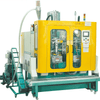

1L Extrusion Blow Molding Machine
1. IntroductionExtrusion blow molding remains the dominant method for manufacturing hollow plastic containers ranging from 100 mL to over 200 L. For the 1L segment—commonly used for shampoo, detergent, edible oil, and beverage bottles—the demand for precision, speed, and sustainability drives continuous innovation in machine design. Unlike injection blow molding, EBM offers lower tooling costs and greater flexibility in resin selection (e.g., HDPE, PP, PETG), making it ideal for mid-...

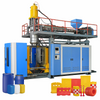
Accumulator-Head Blow Molding Machines: Technology, Applications, and Future Trends Abstract
1. IntroductionBlow molding is a widely used manufacturing process for hollow plastic parts. Among its variants—extrusion blow molding (EBM), injection blow molding (IBM), and stretch blow molding (SBM)—the accumulator-head (or储料缸式) EBM stands out for large-part production. Unlike continuous extrusion systems, accumulator-head machines store molten polymer in a reservoir before rapidly injecting it through a die head, enabling precise control over parison dimensions and wall thickness—critical for containers requiring leak-proof performance...

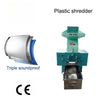
Plastic Granulators: Technological Evolution, Market Dynamics, and the Role in Advancing Circular Economy Abstract
1. Introduction Global plastic waste generation exceeded 400 million tons in 2024, with only 9% effectively recycled worldwide [5]. In China, 19.5 million tons of plastic were recovered—a 2.6% increase from 2023—but over 75% of this volume requires mechanical size reduction before regeneration [1][5]. At the heart of this preprocessing stage lies the plastic granulator, a machine designed to convert bulky, irregular plastic scrap into consistent granules (typically 3–12 mm)...

Powerful plastic crusher
1. Introduction Plastic waste management remains a global environmental and economic challenge. In China alone, 62 million tons of plastic waste were generated in 2024, with only 19.5 million tons (31.5%) recovered for recycling [2]. Crucially, over 75% of this recovered material must undergo mechanical size reduction before cleaning, sorting, or pelletizing—placing high-performance plastic granulators at the heart of the recycling value chain [2]. While basic crushers suffice for soft,...

Plastic crusher
1. Introduction Global plastic production has surpassed 400 million tons annually, yet only 9–35% is effectively recycled [1]. In China—the world’s largest plastic producer and consumer—62 million tons of waste plastic were generated in 2024, of which 19.5 million tons were recovered, yielding a national recycling rate of 31.5% [1]. Crucially, over 75% of this recovered material must undergo mechanical size reduction before further processing, placing plastic granulators at the...

Air-cooled screw chiller
Air-Cooled Screw Chillers: High-Efficiency, Water-Free Cooling for Modern Industrial and Commercial Applications AbstractAir-cooled screw chillers have emerged as a leading solution for medium-to-large-scale cooling in water-scarce or space-constrained environments. By integrating robust twin-screw compressors with finned-tube air-cooled condensers, these systems deliver refrigeration capacities from 400 kW to over 2000 kW without requiring cooling towers or water treatment infrastructure. This paper presents a technical review of their vapor-compression cycle, core components—including...

Water-cooled screw-type chiller
1. Introduction As global manufacturing intensifies and sustainability regulations tighten, the demand for reliable, energy-efficient cooling has never been greater. Among all chiller types, water-cooled screw-type industrial chillers stand out for their ability to deliver high cooling capacity (typically 100–2000 RT), exceptional part-load efficiency, and long service life (>20 years) under 24/7 operation [1][3]. Widely deployed in injection molding plants, biopharmaceutical reactors, laser cutting systems, and semiconductor cleanrooms, these chillers...

Air-cooled chiller
1. Introduction As industries worldwide pursue leaner, greener operations, thermal management has become a critical determinant of productivity, product quality, and sustainability. Among cooling technologies, air-cooled chillers offer a compelling balance of performance, simplicity, and cost-effectiveness—particularly in regions with limited water access or stringent wastewater regulations [1][3]. Deployed from injection molding plants to semiconductor fabs, these self-contained units require only electrical power and minimal piping to deliver chilled water (typically...