Accumulator-Head Blow Molding Machines: Technology, Applications, and Future Trends Abstract
1. Introduction
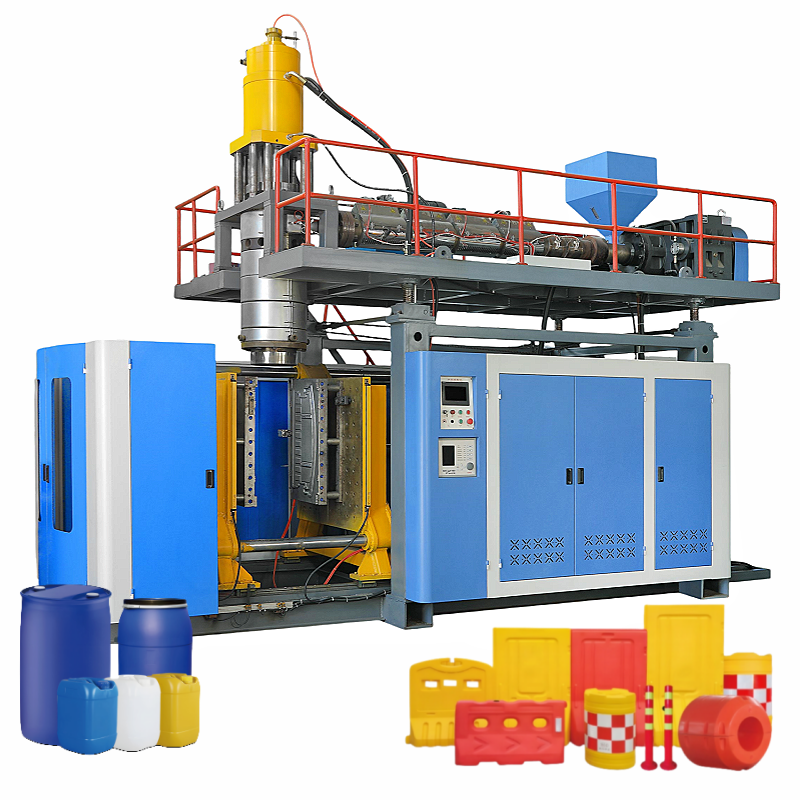
Blow molding is a widely used manufacturing process for hollow plastic parts. Among its variants—extrusion blow molding (EBM), injection blow molding (IBM), and stretch blow molding (SBM)—the accumulator-head (or储料缸式) EBM stands out for large-part production. Unlike continuous extrusion systems, accumulator-head machines store molten polymer in a reservoir before rapidly injecting it through a die head, enabling precise control over parison dimensions and wall thickness—critical for containers requiring leak-proof performance and structural strength.
2. Working Principle and Technical Advantages
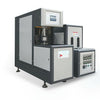
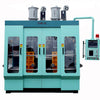
In an accumulator-head blow molding machine, plastic resin (typically HDPE or PP) is melted and accumulated in a hydraulically actuated storage cylinder. Once sufficient material is gathered, a fast-acting plunger forces the melt through an annular die to form a parison. The mold then closes around the parison, and compressed air inflates it into the final shape.
Key advantages include:
- Uniform wall thickness: Minimizes sagging during parison drop, especially vital for tall or heavy-walled containers (e.g., 200L chemical drums).
- High repeatability: Ideal for mass production with tight tolerances.
- Multi-layer capability: Modern systems support 2–6 layer co-extrusion, incorporating barrier resins (e.g., EVOH) for enhanced chemical resistance or oxygen impermeability.
- Energy efficiency: Shorter cycle times and reduced material waste compared to continuous extrusion for large parts.
3. Primary Applications
The dominant application lies in industrial packaging:
- Chemical drums (20–250L): Require high impact resistance and corrosion protection.
- IBC totes (1000L): Used for bulk transport of liquids; demand strict dimensional stability.
- Pharmaceutical and food-grade containers: Benefit from cleanroom-compatible designs and FDA-compliant materials.
- Automotive fuel tanks: Multi-layer accumulator systems produce complex, high-barrier fuel reservoirs meeting emission standards.
According to industry reports, China’s accumulator-head blow molding market is projected to grow at a CAGR of ~9–11% from 2024 to 2030, driven by rising demand in green packaging and smart manufacturing.
4. Emerging Trends and Innovations
Recent developments focus on intelligence, sustainability, and customization:
- Smart control systems: PLC and IoT integration enable real-time monitoring of temperature, pressure, and cycle parameters, improving yield rates (>99% in leading models like those from Ningbo Jinge).
- Energy recovery: Regenerative hydraulic systems reduce power consumption by up to 20%.
- Bio-based and recyclable materials: Compatibility with rHDPE and biodegradable polymers aligns with circular economy goals.
- Modular design: Allows quick reconfiguration for different container sizes, reducing downtime and supporting small-batch production.
5. Conclusion
Accumulator-head blow molding technology continues to evolve beyond traditional industrial use, embracing digitalization and environmental responsibility. As downstream industries demand safer, lighter, and smarter packaging solutions, the next generation of storage-cylinder blow molding machines will likely integrate AI-driven process optimization, closed-loop material recycling, and seamless factory automation—solidifying their role as a cornerstone of advanced plastic manufacturing.
-
Đăng trong
extrusion blow molding machine