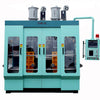
Air-cooled chiller

1. Introduction
As industries worldwide pursue leaner, greener operations, thermal management has become a critical determinant of productivity, product quality, and sustainability. Among cooling technologies, air-cooled chillers offer a compelling balance of performance, simplicity, and cost-effectiveness—particularly in regions with limited water access or stringent wastewater regulations [1][3].
Deployed from injection molding plants to semiconductor fabs, these self-contained units require only electrical power and minimal piping to deliver chilled water (typically 5–15°C) with temperature stability as tight as ±0.1°C [1]. With the global industrial chiller market projected to reach $89.6 billion by 2024 and China accounting for over 30% of demand, air-cooled systems are central to the next generation of smart manufacturing [8].
2. Working Principle and System Architecture
Air-cooled chillers operate on the vapor-compression refrigeration cycle, comprising four key stages:
- Compression: A hermetic scroll, screw, or reciprocating compressor pressurizes low-pressure refrigerant vapor (e.g., R22, R407C) into a high-temperature, high-pressure gas.
- Condensation: The hot gas flows into an air-cooled condenser—a finned-tube heat exchanger—where axial or centrifugal fans force ambient air across the coils, rejecting heat and condensing the refrigerant into liquid.
- Expansion: The high-pressure liquid passes through a thermostatic expansion valve (TXV) or electronic expansion valve (EEV), dropping pressure and temperature to form a cold liquid-vapor mixture.
- Evaporation: In the shell-and-tube evaporator, this mixture absorbs heat from the process water loop, producing chilled water while the refrigerant vaporizes and returns to the compressor [1][3].
This closed-loop design enables plug-and-play operation: no cooling tower, water treatment, or makeup water is required—ideal for rooftop, mobile, or temporary installations [3][9].
3. Core Components and Performance Metrics
| Component | Function | Modern Innovations |
|---|---|---|
| Compressor | Drives refrigerant cycle | High-efficiency scroll/screw compressors; VFDs for part-load optimization |
| Air-Cooled Condenser | Rejects heat to ambient air | Hydrophilic aluminum fins; optimized fan blade design for lower noise (<65 dB) |
| Evaporator | Absorbs heat from process water | Large-capacity shell-and-tube with anti-corrosion coatings |
| Refrigerant | Heat transfer fluid | Transition from R22 to R407C, R32, and R290 (low-GWP alternatives) |
Key performance indicators include:
- COP (Coefficient of Performance): Typically 2.8–3.8 under standard conditions (ARI 550/590).
- IPLV (Integrated Part Load Value): Critical for real-world efficiency—modern VFD-equipped units achieve IPLV > 5.0 [6].
- Temperature Stability: ±0.1°C for precision applications (e.g., laser cutting, bioreactors) [1][9].
4. Technological Advancements (2020–2026)
4.1 Variable-Frequency Drives (VFDs)
Over 47.3% of new air-cooled chillers in China now feature VFDs, allowing compressors and fans to modulate speed based on real-time load—reducing energy consumption by 15–30% compared to fixed-speed models [6]. Companies like Gree and Midea have fully transitioned their mid-to-high-end lines to VFD platforms [6].
4.2 Intelligent Control Systems
Leading manufacturers integrate PLC + IoT platforms for remote monitoring, fault self-diagnosis, and predictive maintenance. ShenChuangYi’s smart chillers, for instance, offer automatic defrost, overload protection, and maintenance alerts via mobile apps—cutting downtime by up to 80% [8][9].
4.3 Eco-Friendly Refrigerants
Driven by the Kigali Amendment and China’s Low Environmental Impact Equipment Promotion Catalog, adoption of R32 (GWP=675) and R290 (GWP=3) is accelerating. While flammability remains a concern, advanced safety controls (e.g., leak detection, ventilation interlocks) enable safe deployment in controlled environments [7].
4.4 Modular & Customized Designs
From compact box-type units for small workshops to explosion-proof models for chemical plants, customization is now standard. Units often include stainless steel tanks, phase-loss protection, and optional heat recovery for space heating—enhancing total system efficiency [9].
5. Industrial Applications
| Sector | Application | Key Requirements |
|---|---|---|
| Plastics | Mold cooling in injection/blow molding | Rapid cooldown; ±0.5°C stability; 30%+ cycle time reduction [1] |
| Laser Processing | Cooling CO₂/fiber lasers | Ultra-stable flow; low vibration; corrosion-resistant water paths |
| Pharmaceuticals | Bioreactor & lyophilizer temp control | ±0.1°C precision; cleanroom-compatible materials |
| Electronics | PCB etching, chip testing | Quiet operation (<60 dB); EMI shielding |
| Food & Beverage | Post-pasteurization cooling | Hygienic design; easy cleaning; food-grade materials |
In one case, a plastic factory using Weidi Machinery’s air-cooled chiller reported 35% faster demolding and 22% lower electricity bills after replacing aging water-cooled units [1].
6. Market Trends and Sustainability Outlook
China dominates both production and innovation in the mid-tier air-cooled chiller segment. Domestic leaders—including ShenChuangYi, Weidi, Gree, and Midea—now compete globally by offering:
- High COP (>3.5) at competitive prices,
- Rapid customization (delivery in <8 weeks),
- Compliance with ISO 50001, CE, and China’s “dual carbon” policy [8][9].
Government incentives for energy-saving equipment have spurred adoption of Tier-1 efficiency models, which consume 25–30% less power than legacy units [7]. Moreover, the elimination of cooling towers reduces both water use and maintenance—a key advantage in arid regions like Northwest China or Southeast Asia.
7. Challenges and Future Directions
Despite advantages, challenges remain:
- Lower COP vs. water-cooled chillers in hot climates (>35°C),
- Higher noise levels (mitigated by acoustic enclosures),
- Dependence on imported compressors and EEVs in mid-tier models [6].
Future trends include:
- Hybrid air/water pre-cooling for high-ambient resilience,
- AI-driven load forecasting for grid-responsive operation,
- Standardized IoT protocols enabling chiller fleets to participate in industrial energy management systems (IEMS).
8. Conclusion
Air-cooled chillers represent a pragmatic, scalable, and increasingly intelligent approach to industrial cooling. By eliminating water dependency, simplifying installation, and integrating digital controls, they meet the evolving needs of modern manufacturing—from small workshops to global supply chains. As energy regulations tighten and decarbonization accelerates, continued innovation in compressors, refrigerants, and system intelligence will ensure air-cooled chillers remain indispensable in the sustainable industrial landscape.
-
Đăng trong
Industrial chiller