
PETG
1. Introduction Polyethylene Terephthalate Glycol (PETG) is a transparent, amorphous thermoplastic belonging to the polyester family, distinguished by its glycol-modified molecular architecture-. As a modified version of polyethylene terephthalate (PET)—one of the most widely used engineering plastics globally—PETG incorporates comonomers such as cyclohexane dimethanol (CHDM) or neopentyl glycol (NPG) into the polymer backbone-. This modification introduces irregularities in the molecular chain that effectively suppress crystallization, yielding an amorphous material with...

Plastic raw materials
1. Introduction Plastics have revolutionized manufacturing industries since the first synthetic polymer was developed in 1869-48. Today, these materials—composed of long-chain macromolecules known as polymers—have replaced many traditional materials such as metals, wood, and glass across countless applications-48. The global production of plastics has increased prodigiously to meet rapidly growing demand, driven by their inexpensive, multipurpose, durable, and lightweight characteristics-1. Plastic raw materials consist of polymer resins as the primary...

Development and Application of Semi-Automatic PET Stretch Blow Molding Machines: A Comprehensive Review
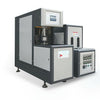
Development and Application of Semi-Automatic PET Stretch Blow Molding Machines: A Comprehensive Review Abstract Polyethylene terephthalate (PET) bottles have become ubiquitous in the packaging industry due to their excellent mechanical properties, transparency, and recyclability. Semi-automatic PET blow molding machines represent a critical segment of the manufacturing equipment market, offering a balanced solution between manual operation and full automation. This paper provides a comprehensive review of semi-automatic PET stretch blow molding...

Evaporative Cooling Air Conditioners: A Sustainable Pathway to Energy-Efficient Building Cooling
Abstract The escalating global demand for space cooling, driven by climate change and urbanization, has intensified the urgency for energy-efficient and environmentally sustainable air conditioning solutions. Evaporative cooling air conditioners, which harness the latent heat of water evaporation to achieve substantial temperature reduction with minimal electricity consumption, present a compelling alternative to conventional vapor-compression systems. This paper provides a comprehensive review of evaporative cooling technologies, encompassing direct, indirect, and hybrid...

Water-cooled chiller
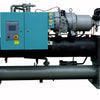
A Comprehensive Review of Water-Cooled Screw Chillers: Principles, Performance, and Advancements Abstract Water-cooled screw chillers are widely employed in commercial and industrial air-conditioning and refrigeration systems, offering reliable cooling capacity across a broad range of applications. This paper provides a comprehensive review of water-cooled screw chillers, covering their fundamental working principles, system components, performance characteristics, and recent technological advancements. The vapor-compression refrigeration cycle—comprising compression, condensation, throttling, and evaporation—is examined in...

Design and Operational Analysis of a 5L Extrusion Blow Molding Machine for Mid-Capacity Container Production
Abstract The 5-liter extrusion blow molding (EBM) machine occupies a strategic position in the plastic packaging manufacturing landscape, serving as a versatile workhorse for mid-capacity container production across diverse industries. This paper presents a comprehensive technical analysis of the 5L EBM machine, examining its architectural design, core subsystems, operational principles, and key performance parameters. Drawing on industry data from representative models including the DKB-5L, LEENY-S5L, and BST series, the study...

Design and Operational Analysis of a 2.5L Extrusion Blow Molding Machine for Medium-Sized Container Production
Abstract The 2.5-liter extrusion blow molding (EBM) machine represents a critical technological solution in the mid-capacity container manufacturing sector, bridging the gap between high-speed small-bottle production and large-vessel blow molding systems. This paper presents a comprehensive technical analysis of the 2.5L EBM machine, examining its architectural design, operational principles, key performance parameters, and industrial applications. Drawing on industry-standard models including the DKB-2.5L2JUWD and MKB-2.5L series, the study details the machine's...

1.8L Extrusion Blow Molding Machine
1. IntroductionThe 1.8L container size occupies a critical niche in consumer packaging: large enough for economical refills (e.g., shampoo, liquid detergent, edible oil), yet compact for retail shelf appeal. Unlike smaller bottles produced via injection stretch blow molding, 1.8L containers are predominantly manufactured using extrusion blow molding due to lower mold costs, faster changeover, and superior flexibility in resin selection—including HDPE, PP, PETG, and multi-layer barrier materials like EVOH. This...