PETG
1. Introduction
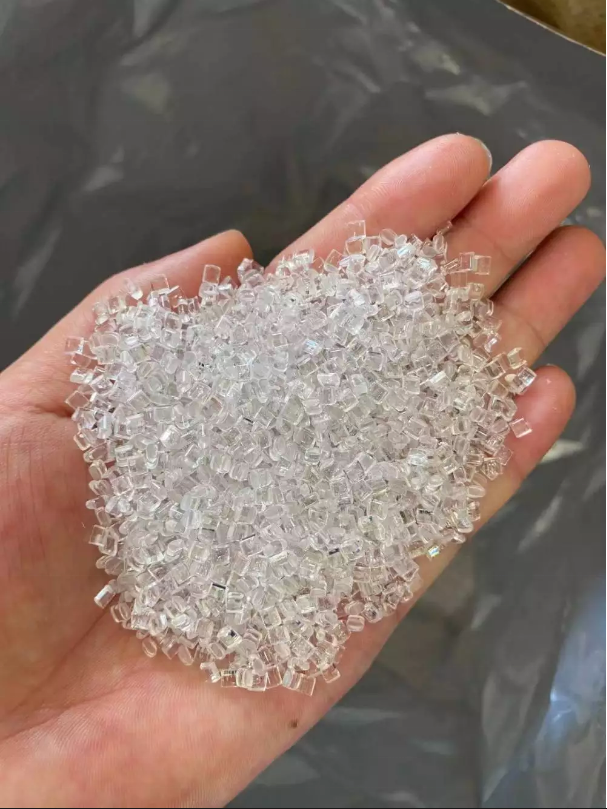
Polyethylene Terephthalate Glycol (PETG) is a transparent, amorphous thermoplastic belonging to the polyester family, distinguished by its glycol-modified molecular architecture-. As a modified version of polyethylene terephthalate (PET)—one of the most widely used engineering plastics globally—PETG incorporates comonomers such as cyclohexane dimethanol (CHDM) or neopentyl glycol (NPG) into the polymer backbone-. This modification introduces irregularities in the molecular chain that effectively suppress crystallization, yielding an amorphous material with unique property combinations not attainable in conventional PET-.
The development of PETG represents a significant advancement in polyester technology, addressing key limitations of both PET and competing amorphous thermoplastics such as acrylic (PMMA) and polycarbonate (PC). While PET offers excellent mechanical strength and chemical resistance, its semi-crystalline nature complicates processing and limits optical clarity in thick sections. Acrylic provides superior transparency but suffers from brittleness, whereas polycarbonate offers exceptional impact resistance at a higher cost and with greater processing difficulty-24. PETG occupies a strategic position in this materials landscape, combining high transparency (comparable to acrylic), toughness approaching that of polycarbonate, and processing ease superior to both-24.
The global demand for PETG has grown substantially across multiple industrial sectors, driven by its versatility, recyclability, and favorable regulatory profile-. Applications span from food packaging and medical device housings to automotive interior components and additive manufacturing feedstocks-. The material's biocompatibility and FDA compliance have particularly accelerated its adoption in healthcare and food-contact applications-.
This review aims to provide a comprehensive overview of PETG, covering its chemical structure and synthesis, physical and mechanical properties, processing characteristics, and application domains. The structure-property relationships governing PETG's performance are examined, and recent advances in additive manufacturing and sustainable recycling are discussed.
2. Chemical Structure and Synthesis
2.1 Molecular Architecture
PETG is a random copolyester synthesized through the copolymerization of terephthalic acid (or dimethyl terephthalate) with ethylene glycol and a glycol modifier, typically 1,4-cyclohexane dimethanol (CHDM)-. The incorporation of CHDM disrupts the regular chain structure that would otherwise allow close molecular packing and crystallization in homopolymer PET-. This disruption arises from the bulky, rigid cyclohexane ring of CHDM, which introduces conformational constraints and steric hindrance along the polymer backbone.
The degree of modification—specifically the molar ratio of CHDM to ethylene glycol—critically influences the material's properties. The glass transition temperature (Tg) ranges from 78°C to 88°C depending on the CHDM molar ratio-. Higher CHDM content generally increases Tg by restricting segmental mobility, while also enhancing the amorphous character of the material-. The random distribution of comonomer units along the chain prevents the formation of ordered crystalline domains, resulting in a fully amorphous or very low-crystallinity polymer.
2.2 Synthesis Routes
Commercial PETG is produced via melt polycondensation, typically in a two-stage process comprising esterification (or transesterification) followed by polycondensation under reduced pressure. The choice of glycol modifier and its incorporation ratio can be tailored to achieve specific property targets. Recent research has explored bio-based routes to PETG, incorporating plant-derived biomass components to produce copolyesters with enhanced heat resistance and reduced environmental footprint-.
An alternative approach involves the chemical upcycling of PET waste through depolymerization-repolymerization strategies. PET can be depolymerized with ethylene glycol and CHDM, followed by repolymerization to yield value-added PETG copolyesters-. This route offers a sustainable pathway for plastic waste valorization while producing materials with properties comparable to virgin PETG.
3. Physical and Mechanical Properties
3.1 Optical Properties
PETG is renowned for its exceptional optical clarity, with light transmission exceeding 90% and haze values below 1%--2. This high transparency, combined with low intrinsic color, makes PETG suitable for applications requiring visual clarity, such as transparent packaging, point-of-purchase displays, and protective guards-24. The material's refractive index of approximately 1.6 further contributes to its optical performance-16.
3.2 Mechanical Properties
PETG exhibits a well-balanced mechanical property profile characterized by high strength, excellent ductility, and outstanding impact resistance. Key mechanical properties are summarized in Table 1.
Table 1. Typical Mechanical Properties of PETG
| Property | Value | Test Standard |
|---|---|---|
| Tensile Strength (Ultimate) | 25–58 MPa | ASTM D638 / ISO 527- |
| Yield Stress | 44.6–49 MPa | ASTM D638 / ISO 527-2 |
| Elongation at Break | 240–250% | ASTM D638 / ISO 527-2 |
| Flexural Modulus | 1,800–2,158 MPa | ASTM D790 / ISO 178-2 |
| Flexural Strength | 64–77 MPa | ASTM D790 / ISO 178-2-16 |
| Notched Izod Impact | 77–105 J/m | ASTM D256-2-16 |
| Compressive Strength | ~55 MPa | —-16 |
| Rockwell Hardness | R 108–120 | ASTM D785-2-16 |
The tensile strength of PETG ranges from 25 to 58 MPa depending on grade, processing conditions, and test direction-. The material exhibits high ductility with elongation at break reaching 240–250%, indicating significant plastic deformation capacity prior to failure-2. This ductility contributes to the material's toughness and resistance to brittle fracture.
PETG's impact resistance is notably superior to that of acrylic, with notched Izod impact values 3 to 10 times higher than PMMA-. The impact strength of approximately 77–105 J/m positions PETG between acrylic and polycarbonate in terms of toughness-16-2. The material also demonstrates excellent resistance to stress whitening, a common failure mode in amorphous thermoplastics subjected to impact or deformation-.
The flexural modulus of PETG ranges from 1,800 to 2,158 MPa, indicating good stiffness while maintaining sufficient flexibility for forming operations-2. The flexural strength of 64–77 MPa further confirms the material's load-bearing capacity in structural applications-2-16.
3.3 Thermal Properties
PETG is an amorphous thermoplastic characterized by a glass transition temperature (Tg) typically ranging from 75°C to 86°C-. The melting point ranges from 220°C to 265°C-. The heat deflection temperature (HDT) at 0.45 MPa is approximately 70–73°C, while at 1.80 MPa it decreases to approximately 62°C--2-16.
The relatively low Tg imposes a service temperature ceiling of approximately 60–70°C; above this temperature, the material softens and loses mechanical integrity-24. This thermal limitation precludes PETG's use in high-temperature applications such as autoclave sterilization or components near heat sources-24. However, the material retains useful properties at low temperatures, making it suitable for cold-environment applications.
The specific heat capacity of PETG is approximately 1,200 J/kg-K, with thermal conductivity of 0.29 W/m-K and a coefficient of thermal expansion of approximately 68 µm/m-K-16.
3.4 Chemical Resistance
PETG exhibits good chemical resistance to a wide range of substances, including water, acids, alkalis, and many alcohols-. The material is resistant to oils, cleaning agents, and mild solvents-. This chemical robustness makes PETG suitable for applications involving contact with food, beverages, and various industrial chemicals.
However, PETG is susceptible to attack by certain aggressive solvents, including aromatic hydrocarbons, ketones, and chlorinated solvents. The material's amorphous structure, while advantageous for clarity and toughness, renders it more permeable to some chemicals compared to semi-crystalline PET. Compatibility should be verified for specific chemical environments.
3.5 Electrical Properties
PETG demonstrates favorable electrical insulation properties, with a dielectric constant of approximately 2.4–2.6 and dielectric strength of 16 kV/mm-16. The material maintains dielectric properties under elevated temperatures up to 180°C, making it suitable for electrical insulation films and electronic applications-.
3.6 Water Absorption and Environmental Resistance
PETG exhibits low water absorption, typically below 0.2% after 24 hours immersion and remaining below 1% even under accelerated aging conditions at 70°C-16-. This low moisture uptake contributes to dimensional stability and retention of mechanical properties in humid environments.
The material is fully recyclable under class 1 resin codes-5. However, PETG is slightly more sensitive to prolonged UV exposure compared to materials such as PMMA-. UV stabilizers such as Cyasorb 1164 and Cyasorb 3638 can be incorporated to enhance photostability and resistance to UV-induced weathering-. Carbon fiber reinforcement has also been shown to improve UV stability-.
4. Processing Characteristics
4.1 Injection Molding
PETG is readily processed by injection molding, with melt temperatures typically ranging from 230°C to 290°C-. Mold temperatures of 10°C to 60°C are recommended, with colder tools preferred to preserve optical clarity by preventing any tendency toward crystallization--24. Predrying is essential, typically performed at 65°C for 4 hours; PETG hydrolyzes if molded wet and permanently loses mechanical strength-24-.
The material's amorphous nature and relatively wide processing window make it forgiving during injection molding, accommodating complex geometries and thin-wall sections down to 0.2 mm-. Mold shrinkage of 0.2–0.5% should be accommodated in tool design-24.
4.2 Extrusion and Thermoforming
PETG is widely processed by sheet and film extrusion-2. Extrusion melt temperatures typically range from 210°C to 260°C-. The material's excellent melt strength and drawability enable the production of thick-gauge sheets up to 25.4 mm-.
Thermoforming is a particularly important processing route for PETG, as the material forms at 130–150°C with very little pre-drying required compared to PET-24-. PETG draws deeply without whitening or stress-induced crystallization, making it the default material for vacuum-formed clear packaging and protective guards-24. The material's high ductility at forming temperatures allows for complex geometries with generous radii; sharp corners should be avoided as they thin the material to the point of failure-24.
4.3 3D Printing / Additive Manufacturing
PETG has become a highly popular feedstock for extrusion-based additive manufacturing, particularly fused filament fabrication (FFF)-57-. The material's balance of printability, mechanical properties, and thermal resistance offers distinct advantages over other 3D printing thermoplastics-.
Typical printing temperatures range from 190°C to 260°C-. PETG exhibits lower warpage and shrinkage compared to ABS, while offering superior toughness and heat resistance compared to PLA-. The material's amorphous nature contributes to good interlayer adhesion and reduced tendency toward delamination-56.
Recent research has investigated the mechanical properties of FFF-printed PETG as a function of printing parameters, including infill pattern, raster angle, and processing temperature-5. Studies have shown that increasing printing temperature enhances interlayer bonding and mechanical properties-56, while increasing printing speed generally decreases part quality by introducing discontinuities-56. The material exhibits anisotropic behavior in printed parts, with Young's modulus varying by print direction-57.
Research has also explored blends of virgin PETG with post-consumer PETG and post-industrial PET waste, demonstrating the feasibility of incorporating up to 40% recycled content without significant quality degradation for certain grades-56.
4.4 Other Processing Methods
PETG can also be processed by blow molding, rotational molding, and CNC machining-24. The material bonds well with standard solvents, enabling assembly of complex structures-24.
5. Applications
5.1 Packaging
Packaging represents one of the largest application segments for PETG, accounting for 15–20% of the market-. The material's exceptional clarity, gloss, and toughness make it ideal for transparent packaging applications including blister packs, clamshells, point-of-purchase displays, and retail packaging-24-2. PETG's FDA compliance for food contact further expands its use in food packaging, beverage containers, and kitchenware-.
5.2 Medical Devices and Healthcare
PETG's biocompatibility, chemical resistance, and sterilizability have driven its adoption in medical applications-. The material is used in medical device packaging, pharmaceutical packaging, custom medical components, and sterilization-friendly products-. PETG can be sterilized by ethylene oxide or gamma radiation without significant degradation-. The medical segment accounts for 4–6% of the PETG market and is growing at 8.5–9.5% annually-.
5.3 Consumer Goods
PETG finds extensive use in consumer goods, representing 15–20% of the market-. Applications include toys (with EN71-3 toy safety certification)-, cosmetics packaging-, household items, and electronic housings-. The material's non-toxic, odorless nature and regulatory compliance make it suitable for children's products and food-contact applications-.
5.4 Automotive and Industrial Applications
PETG is employed in automotive components including interior trim, brackets, and custom accessories-. The material's toughness, chemical resistance, and aesthetic quality make it suitable for visible interior applications. In industrial settings, PETG is used for protective guards, machine covers, and electrical insulation films-.
5.5 Additive Manufacturing
3D printing has emerged as a significant and growing application for PETG, driven by the material's favorable combination of printability, mechanical properties, and thermal resistance-. PETG is widely used for prototyping, functional parts, and small-batch production across industries including automotive, aerospace, marine, construction, and robotics-.
5.6 Emerging Applications
Recent research has explored PETG as a shape memory polymer for 4D printing applications, capitalizing on its excellent printability and tunable thermomechanical properties-. Carbon fiber-reinforced PETG composites have been developed to enhance mechanical properties and UV stability-. Bio-based PETG grades incorporating plant-derived components offer enhanced sustainability profiles-.
6. Sustainability and Recycling
PETG is fully recyclable under class 1 resin codes, though it is not biodegradable as it is derived from petroleum-based feedstocks-5. The material's recyclability, combined with its ease of processing, supports circular economy initiatives-.
Recent research has demonstrated the feasibility of recycling post-consumer PETG and post-industrial PET waste for filament-based material extrusion applications-56. Studies have shown that up to 40% recycled content can be incorporated into certain PETG grades without significant quality degradation-56. However, the effects of recycling on molecular weight and mechanical properties are grade-dependent, with some grades undergoing chain scission during processing while others may undergo post-condensation-56.
Chemical upcycling strategies have been developed to depolymerize PET waste with glycol modifiers and repolymerize into PETG copolyesters-. This approach offers a sustainable pathway for plastic waste valorization while producing materials with properties comparable to virgin PETG.
7. Limitations and Challenges
Despite its numerous advantages, PETG has several limitations that must be considered in material selection:
Thermal Limitations. The glass transition temperature of approximately 80°C imposes a service temperature ceiling of 60–70°C-24. PETG is not suitable for applications involving high temperatures, autoclave sterilization, or proximity to heat sources-24.
UV Sensitivity. PETG is more sensitive to UV-induced degradation compared to PMMA, necessitating UV stabilizers for outdoor applications-. Carbon fiber reinforcement can improve UV stability-.
Moisture Sensitivity During Processing. PETG hydrolyzes if processed with residual moisture, permanently losing mechanical strength-24. Predrying at 65°C for 4 hours is essential.
Chemical Sensitivity. While generally chemically resistant, PETG is susceptible to attack by certain aggressive solvents including aromatic hydrocarbons, ketones, and chlorinated solvents.
Creep Behavior. PETG exhibits time-dependent deformation under sustained load, with creep behavior becoming non-linear above 60°C-57.
8. Conclusion
Polyethylene Terephthalate Glycol (PETG) has established itself as a versatile engineering thermoplastic that successfully bridges the performance gap between acrylic and polycarbonate. The glycol modification of the PET backbone introduces chain irregularities that suppress crystallization, yielding an amorphous material with exceptional optical clarity (>90% transmission), outstanding impact resistance (3–10 times that of acrylic), and excellent processability across multiple manufacturing techniques.
The material's property profile—combining tensile strength of 25–58 MPa, elongation at break up to 250%, flexural modulus of 1,800–2,158 MPa, and glass transition temperature of 75–86°C—positions PETG favorably for applications requiring clarity, toughness, and dimensional stability. Its chemical resistance to acids, alkalis, and alcohols, combined with FDA food-contact compliance, has driven adoption in packaging, medical devices, and consumer goods.
The rise of additive manufacturing has opened new opportunities for PETG, where its printability, low warpage, and good interlayer adhesion make it a preferred feedstock for fused filament fabrication. Recent advances in sustainable recycling—including incorporation of post-consumer waste and chemical upcycling of PET—offer pathways toward circular economy implementation.
Future research directions include the development of bio-based PETG grades with enhanced sustainability profiles, optimization of processing parameters for additive manufacturing to minimize anisotropy and improve mechanical properties, and the development of PETG composites with enhanced thermal stability, UV resistance, and mechanical performance through incorporation of reinforcements such as carbon fiber and nanomaterials.
-
Đăng trong
Plastic raw materials