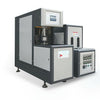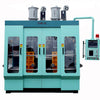
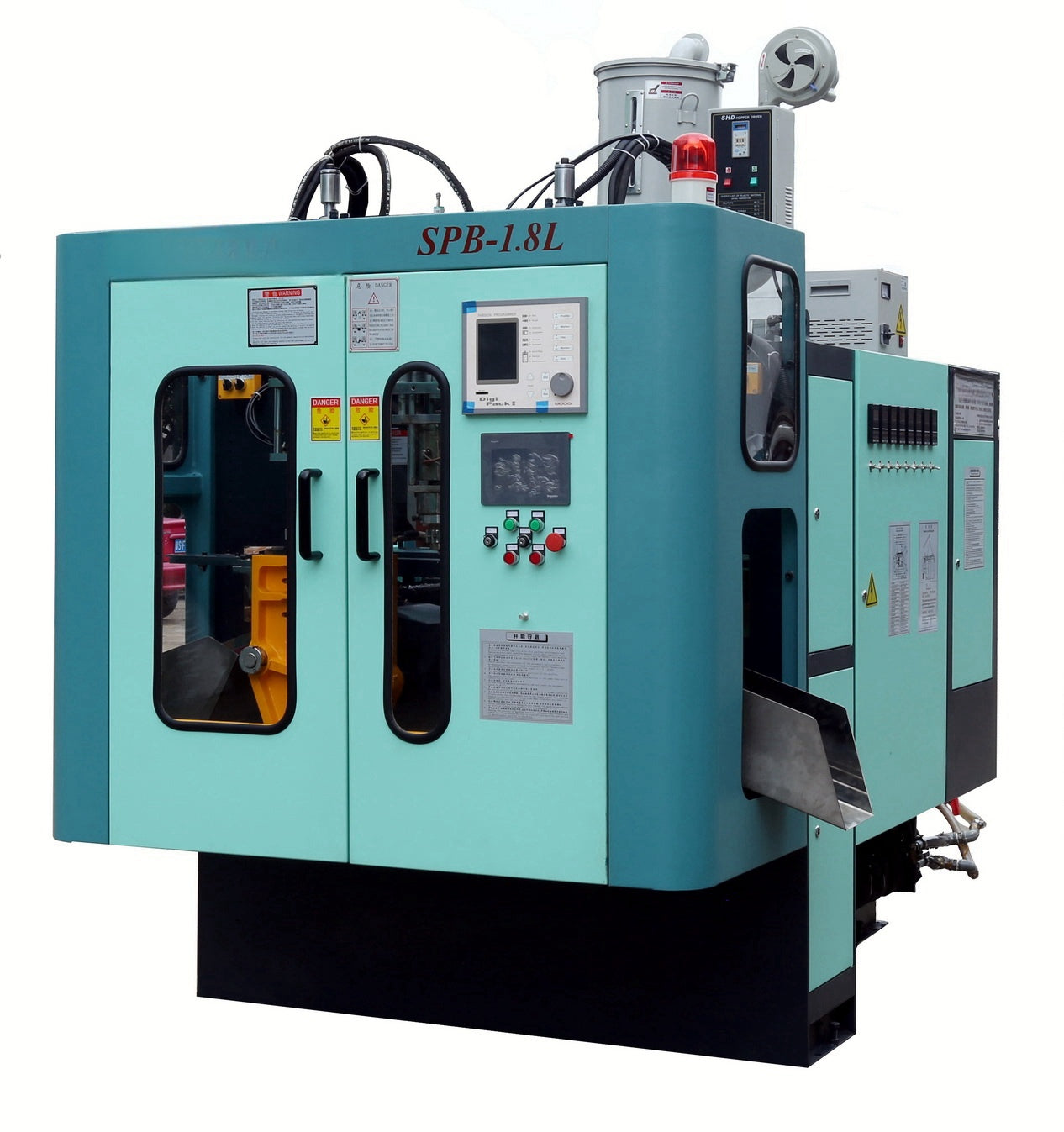
1.8L Extrusion Blow Molding Machine
1. Introduction
The 1.8L container size occupies a critical niche in consumer packaging: large enough for economical refills (e.g., shampoo, liquid detergent, edible oil), yet compact for retail shelf appeal. Unlike smaller bottles produced via injection stretch blow molding, 1.8L containers are predominantly manufactured using extrusion blow molding due to lower mold costs, faster changeover, and superior flexibility in resin selection—including HDPE, PP, PETG, and multi-layer barrier materials like EVOH. This paper examines the technological evolution and operational optimization of dedicated 1.8L EBM systems.
2. Machine Architecture and Key Components
A typical 1.8L EBM machine comprises:
- Extrusion Unit: A single-screw extruder (L/D ≈ 25–30, diameter 55–75 mm) with precise temperature zoning ensures homogeneous melt delivery. For high-clarity or medical-grade applications, all-electric models eliminate hydraulic oil contamination.
- Die Head & Parison Control: Servo-driven mandrel positioning enables real-time adjustment of parison thickness profile, critical for uniform bottom and neck integrity.
- Clamping & Mold System: Locking force typically ranges from 35–50 kN. Fast-closing molds (<1.5 s) with integrated water-cooling channels reduce cycle time.
- Automation: Robotic take-out arms, vision-based defect detection, and automatic trimming enhance throughput and reduce labor dependency.
Notably, the EKB-1.8L all-electric model (Dongguan Jinjun Machinery) exemplifies this trend—featuring dual stations, 40 kN clamping force, and compatibility with PC, Tritan, and recycled resins.
3. Material Flexibility and Product Quality
The 1.8L EBM machine supports a wide polymer portfolio:
- HDPE: Dominates household chemical bottles (excellent chemical resistance, low cost).
- PP: Used for hot-fill applications (e.g., sauces) due to higher heat deflection temperature.
- PETG/Tritan: Preferred for transparent cosmetic or medical containers requiring clarity and impact strength.
- Multi-layer co-extrusion: Enables incorporation of EVOH barrier layers for oxygen-sensitive contents (e.g., edible oils).
Advanced wall-thickness control—via closed-loop feedback from displacement sensors and servo valves—ensures <±0.1 mm variation, meeting ISO 11469 labeling and drop-test standards.
4. Energy Efficiency and Sustainability
Modern 1.8L EBM systems prioritize green manufacturing:
- All-electric drives reduce energy consumption by 25–35% vs. hydraulic counterparts.
- Regenerative braking recaptures kinetic energy during mold opening/closing.
- Lightweighting strategies cut material use by 8–12% without compromising structural performance.
- Compatibility with up to 30% post-consumer recycled (PCR) HDPE aligns with EU and Chinese circular economy mandates.
5. Industrial Applications
Key sectors include:
- Personal Care: 1.8L shampoo, conditioner, hand soap bottles (often with flip-top or pump dispensers).
- Food & Beverage: Cooking oil, vinegar, soy sauce containers requiring leak-proof seals.
- Pharmaceuticals & Diagnostics: Reagent bottles, saline solution containers under GMP conditions.
- Household Chemicals: Detergents, disinfectants—demanding chemical resistance and child-safe closures.
According to industry data (China Plastics Machinery Association, 2026), the 1–2L segment accounts for ~28% of global EBM output, with annual growth of 4.5% driven by e-commerce and bulk-refill trends.
6. Future Outlook
Emerging innovations include:
- Digital twin integration for predictive maintenance and virtual process tuning.
- AI-powered quality inspection using deep learning to detect micro-defects.
- Modular platforms enabling rapid switch between 1.5L, 1.8L, and 2.0L formats within one production line.
- Hybrid electric-hydraulic systems balancing speed, precision, and cost for mid-tier markets.
7. Conclusion
The 1.8L extrusion blow molding machine represents a convergence of precision engineering, material science, and sustainable manufacturing. As consumer expectations rise for safer, smarter, and greener packaging, this equipment class will continue to evolve—bridging the gap between mass production and premium product integrity.
-
Posted in
extrusion blow molding machine